
The Destruction Service Difference Between Solid State Drive and Hard Disk Drive
At Lexington Computer Recycling, we provide certified data destruction for both conventional hard drives and solid-state devices, with documentation that helps businesses maintain a clear chain of custody from pickup through final processing.
A hard disk drive and a solid-state drive can carry the same sensitive information, but they do not store it the same way. Simply deleting files or formatting a drive does not necessarily make the underlying data unrecoverable. For businesses retiring computers, servers, and other IT assets, the destruction method should account for the type of storage media inside the device.
Learn more about our on-site data destruction and hard drive shredding services.
What Is the Difference Between a Solid-State Drive and a Hard Disk?
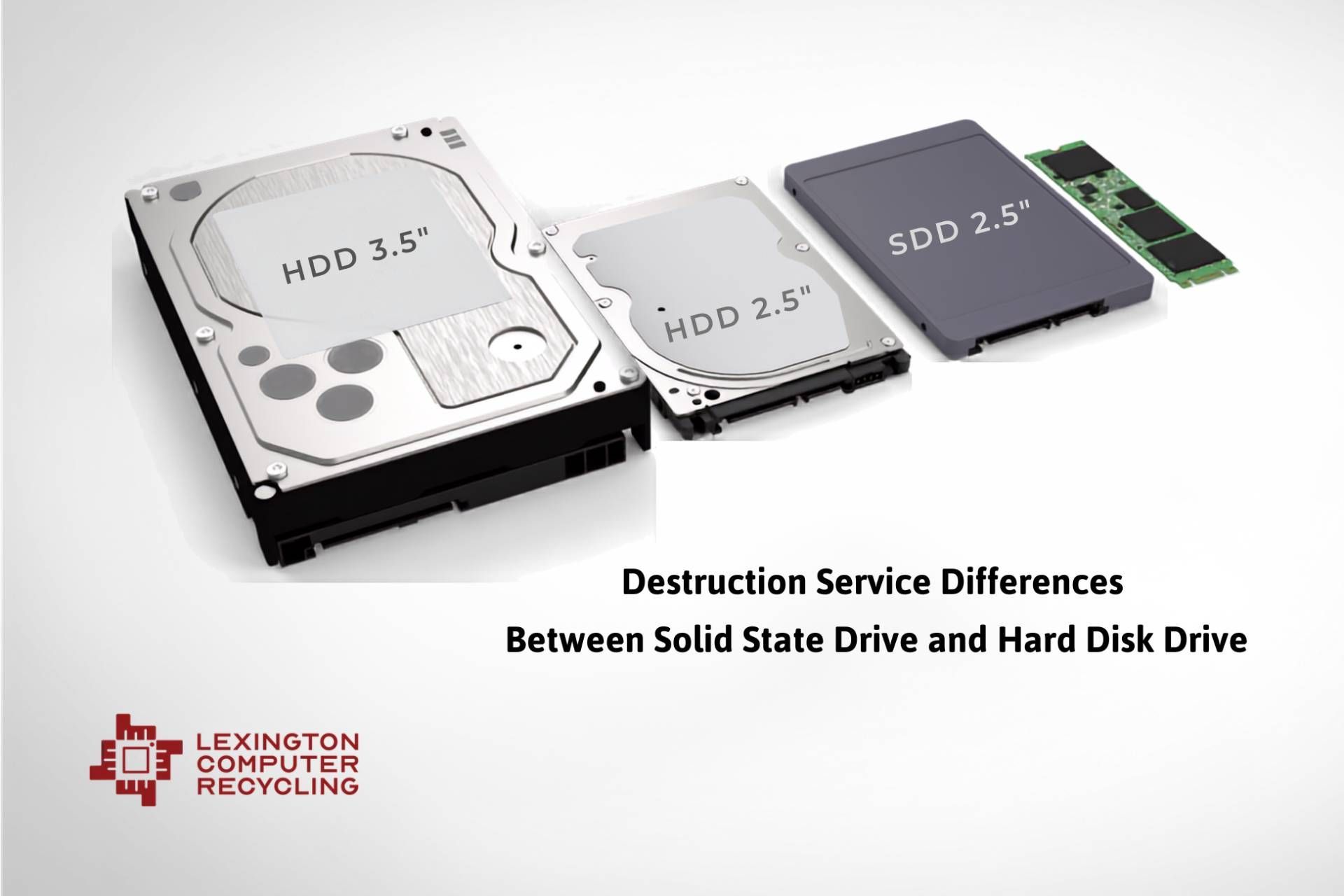
The basic difference between a solid-state drive and a hard disk drive is how each stores information.
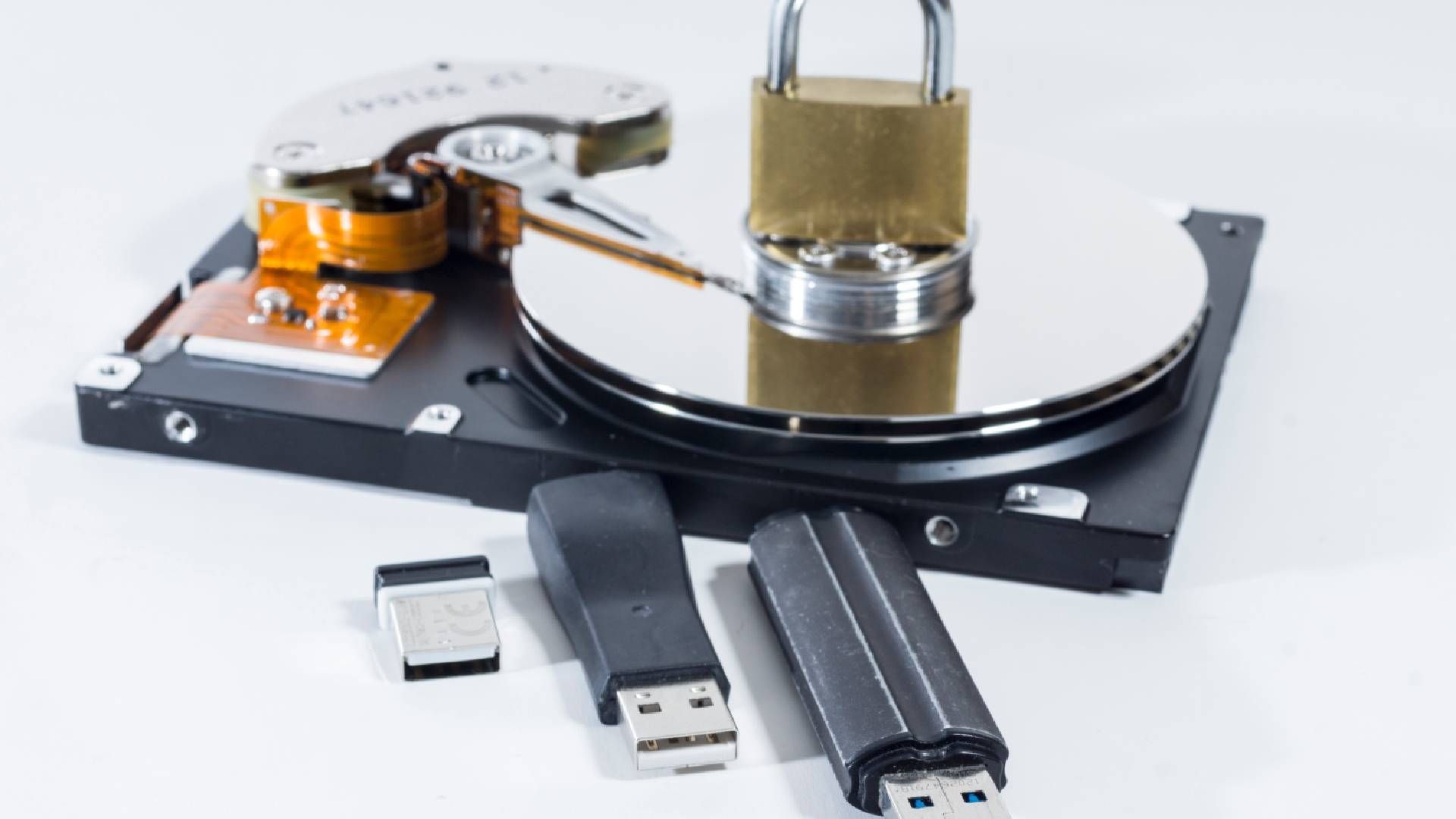
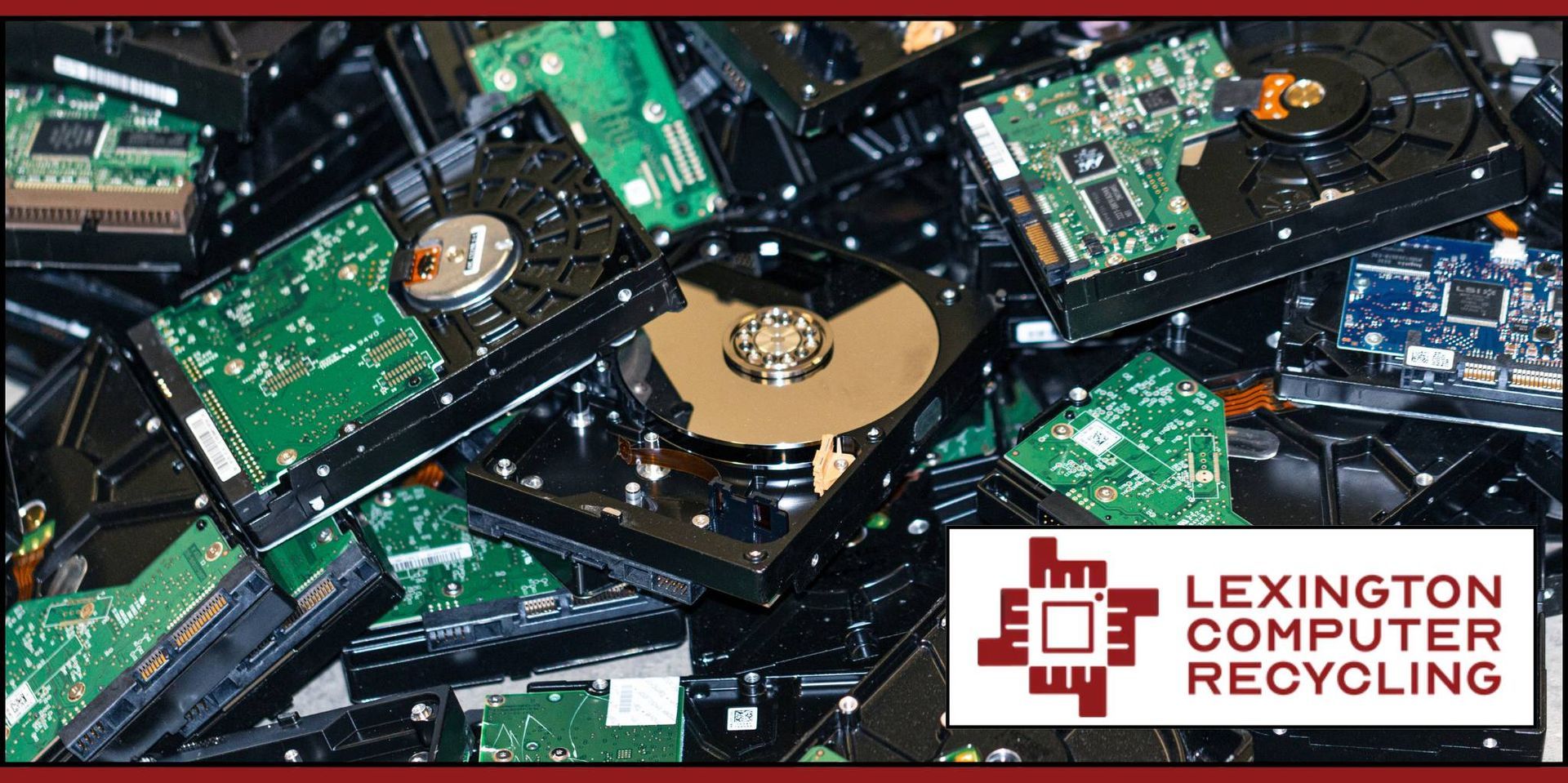
- A conventional hard disk drive, or HDD, records data magnetically on spinning platters. A mechanical read/write head moves across those platters to access the information.
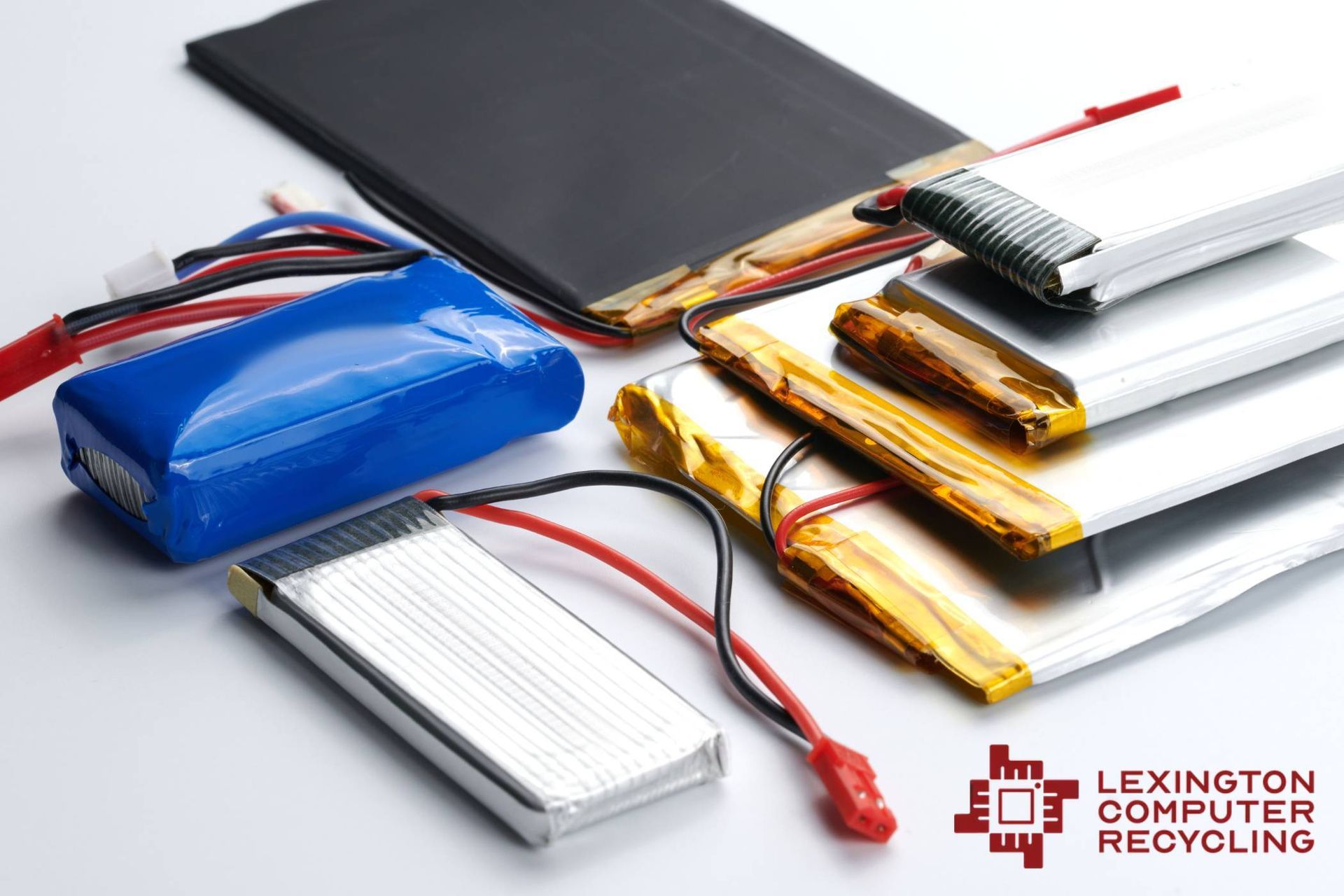
- A solid-state drive, or SSD, has no moving parts. Instead, it stores information electronically in NAND flash memory chips.
That difference becomes important during data destruction. Physical damage that makes the platters of a conventional hard drive unreadable does not necessarily affect flash-based storage in exactly the same way.
Why SSDs Require a Different Approach to Data Destruction
Solid-state storage manages data differently from a conventional hard disk. Technologies such as wear leveling and over-provisioning distribute information across flash memory and reserve portions of the drive for internal use.
For that reason, deleting a file or performing a basic software overwrite is not the same thing as physically destroying the storage media.
When an organization has decided that a drive should not be reused, physical destruction provides a straightforward way to permanently retire the media. The appropriate process depends on whether the device contains magnetic platters, solid-state memory, or another form of storage.
Businesses retiring larger quantities of computers, servers, and other technology may also handle destruction as part of a broader IT asset disposition, or ITAD, process.
What NIST Guidance Says About Media Sanitization
The National Institute of Standards and Technology addresses secure media disposal through NIST Special Publication 800-88 Rev. 2, Guidelines for Media Sanitization.
NIST Special Publication 800-88 sorts sanitization into three categories: Clear, Purge, and Destroy, and it applies them differently depending on the media. The current guidance emphasizes that an organization’s sanitization decisions should account for factors such as the type of media involved, the sensitivity of the information, how the equipment will be handled afterward, and the level of assurance required.
In other words, there is no reason to treat every retired storage device exactly the same.
Organizations that plan to reuse equipment may choose an appropriate sanitization process. When drives are being permanently retired, physical destruction can remove the storage media from service altogether.
What Certified HDD and SSD Destruction Looks Like
Lexington Computer Recycling provides secure destruction for conventional hard drives, solid-state devices, and other data-bearing media.
Depending on your project and where the equipment is located, our process can include:
- Physical destruction of hard disk drives and solid-state devices using methods appropriate for the media being processed.
- On-site destruction when required, allowing your team to witness the process and maintain custody of sensitive media through destruction.
- Serialized asset reporting documenting the devices processed during the project.
- Certificates of Destruction providing a record of what was destroyed and when.
- Secure removal and recycling of processed material after destruction.
- Nationwide logistics and pickup support for organizations managing equipment across one or multiple locations.
Lexington Computer Recycling holds NAID AAA Certification for product destruction. That certification means the procedures used to handle, transport, track, destroy, and document sensitive materials are independently audited.
The shredder itself is only one part of secure data destruction. Chain of custody, asset tracking, documentation, transportation, and final processing all matter when a business needs to show where retired data-bearing equipment went and what happened to it.
SSD and HDD Destruction as Part of IT Asset Retirement
For some businesses, a hard drive destruction project may involve a few boxes of retired drives. For others, it may be one part of an office cleanout, technology refresh, or complete data center decommissioning.
Lexington Computer Recycling can coordinate the destruction of data-bearing equipment alongside the removal and recycling of the surrounding IT assets. For larger server and infrastructure projects, our data center services include equipment removal, serialized reporting, data destruction or certified wiping, and documented chain of custody. This allows organizations to handle the equipment and the information stored on it as parts of the same retirement process rather than treating data security as an afterthought.
Choose the Right Destruction Process for the Media You Have
The important question is not simply whether an old drive needs to be destroyed. It is what kind of storage media you have and what level of security, documentation, and chain of custody your organization requires.
Lexington Computer Recycling works with businesses, healthcare facilities, data centers, government agencies, and other organizations that need to retire data-bearing equipment securely.
Based in Versailles near Lexington, Kentucky, we provide local service throughout Central Kentucky along with logistics and data destruction support for organizations across the United States.
Call (859) 300-3599 or reach us online to discuss your equipment, volume, location, and data destruction requirements. We can help you determine the appropriate process and provide straightforward pricing quotes for you.